
Phi Phi Islands
Stunning Islands with a Dual Vibe

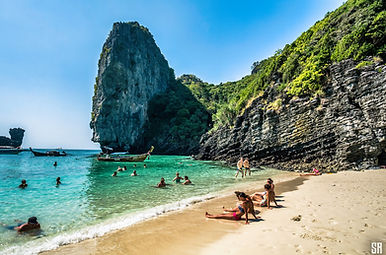
The Phi Phi Islands are one of Thailand’s most iconic island groups, instantly recognizable for their dramatic limestone cliffs, turquoise waters, and white sandy coves. Officially, the archipelago consists of six islands: Phi Phi Don, Phi Phi Leh, Koh Bida Nok, Koh Bida Nai, Koh Mai Phai (better known as Bamboo Island), and Koh Yung (also called Mosquito Island).
Geographically, the Phi Phi Islands sit in the Andaman Sea roughly halfway between Phuket and the Krabi mainland. They lie south of Phang Nga Bay and west of Krabi, making them easily accessible by boat from both Phuket and Ao Nang. This central position has long made Phi Phi a natural stop for traders and fishermen, and today it places the islands at the heart of southern Thailand’s island-hopping routes.
What first made Phi Phi famous was its raw, almost unreal beauty. Towering karst formations rise straight out of the sea, enclosing sheltered bays with crystal-clear water. Long before international fame, these islands were known mainly to local fishermen and adventurous travelers. Everything changed in the late 1990s, when Phi Phi Leh became the filming location for the movie The Beach.
Since then, the islands have become a symbol of tropical Thailand, attracting visitors from all over the world. Living in the region, you quickly understand both the appeal and the importance of protecting these fragile environments, which is why conservation measures and visitor regulations have become part of the Phi Phi story.
The Main Island: Koh Phi Phi Don
Phi Phi Don is the largest and only permanently inhabited island of the group. It has a distinctive double-bay shape, with a narrow strip of land connecting two limestone-backed bays: Ton Sai Bay and Loh Dalum Bay. This is where ferries arrive, and where most accommodation, restaurants, dive shops, and services are located.
Phi Phi Don offers a surprising contrast of atmospheres. During the day, it can feel busy and lively, with boats coming and going and visitors exploring the village on foot. In the evenings, parts of the island transform into a social hub, known for beach bars, fire shows, and nightlife.

At the same time, quieter areas exist just a short walk or boat ride away, particularly on the eastern and northern coasts, where resorts and beaches offer a more relaxed experience.
Phi Phi Don is also a base for snorkeling and diving, with nearby reefs and viewpoints such as the famous Phi Phi Viewpoint rewarding those willing to climb for panoramic views over the island’s twin bays.

The Island that Made Phi Phi Famous: Koh Phi Phi Leh
Phi Phi Leh, located just south of Phi Phi Don, is uninhabited and protected as part of a national park. Despite being smaller, it is the most photographed and internationally recognized island in the group, thanks to the movie “The Beach” with Leonardo Di Caprio. Its steep limestone cliffs enclose stunning bays, the most famous being Maya Bay.
After years of heavy visitation, Maya Bay was closed for environmental recovery, a move that significantly helped coral regeneration and marine life. Today, access is carefully managed, allowing visitors to admire the bay while minimizing ecological impact.

Phi Phi Leh is also home to Pileh Lagoon, a natural swimming pool surrounded by cliffs, and Viking Cave, known for its ancient wall paintings and bird’s nest harvesting.
From a local perspective, Phi Phi Leh represents both the beauty of the Andaman Sea and the challenges of balancing tourism with conservation.

The Other Islands of the Phi Phi Group
Beyond the two main islands, the remaining four islands each have their own character and appeal.
Koh Bida Nok and Koh Bida Nai are small limestone islets located south of Phi Phi Leh, famous among divers for their healthy coral reefs and frequent sightings of marine life such as reef sharks, turtles, and schools of tropical fish. These sites are considered some of the best diving spots in the area, especially for intermediate and experienced divers.

Koh Mai Phai, or Bamboo Island, lies to the northeast of Phi Phi Don and is known for its flat shape, powdery white sand, and shallow, clear waters. Surrounded by a coral reef, it is a popular destination for snorkeling and relaxed beach time. Compared to the dramatic cliffs of Phi Phi Don and Leh, Bamboo Island feels open and serene, making it a favorite stop on day trips from both Phuket and Phi Phi Don.
Koh Yung, often called Mosquito Island, is located just north of Phi Phi Don. It is less visited than Bamboo Island and is appreciated mainly for its snorkeling opportunities and quiet atmosphere.
Its rocky shoreline and clear waters attract those looking to escape the busier parts of the archipelago, even if only for a short while.

Summary
Seen as a whole, the Phi Phi Islands offer a remarkable concentration of landscapes and experiences within a relatively small area. From lively village life and viewpoints on Phi Phi Don to the protected natural wonders of Phi Phi Leh and the tranquil reefs of the smaller islands, each part of the archipelago plays a role in its identity.
For visitors staying in Phuket or Krabi, Phi Phi is more than just a day-trip destination; it is a place that showcases both the extraordinary beauty of southern Thailand and the ongoing effort to preserve it. Spending time here, or simply understanding how the islands fit together, helps visitors appreciate why Phi Phi continues to captivate travelers while reminding everyone of the responsibility that comes with such popularity.

Phi Phi Islands photo gallery


Stéphane Audiger - Photographer & Writer
Passionate about photography since the mid-2000s, I’ve spent years capturing the beauty of Phuket and southern Thailand — from beaches and islands to festivals and daily life. My work reflects a lasting love for the region and its ever-changing light.


