
Mergui Archipelago
Far From It All in Myanmar

The Mergui Archipelago consists of nearly 800 islands scattered across approximately 36,000 km² of the Andaman Sea in southwestern Myanmar. Almost untouched, this remote island world offers an adventurous experience, with a strong sense of isolation amid a natural environment that is both spectacular and wild.
Apparently far removed from many of the harmful influences of modern development, the Mergui Archipelago is home to remarkably well-preserved marine and terrestrial ecosystems.
Its waters provide a refuge for numerous marine species, including whale sharks, dugongs, Bryde's whales, and many others. The islands themselves are also home to a wide variety of mammals, birds, reptiles, and other wildlife.

Travelling to the Mergui Archipelago
Located approximately 200 km northwest of Phuket, the Mergui Archipelago is most commonly reached from Ranong in southern Thailand. To save a day of sailing, many sailing and diving cruises to the archipelago depart from this Thai border town, which lies opposite the Myanmar town of Kawthaung on the other side of the Kraburi River, the natural border between Thailand and Myanmar. The journey from Phuket to Ranong takes around five hours by minibus.
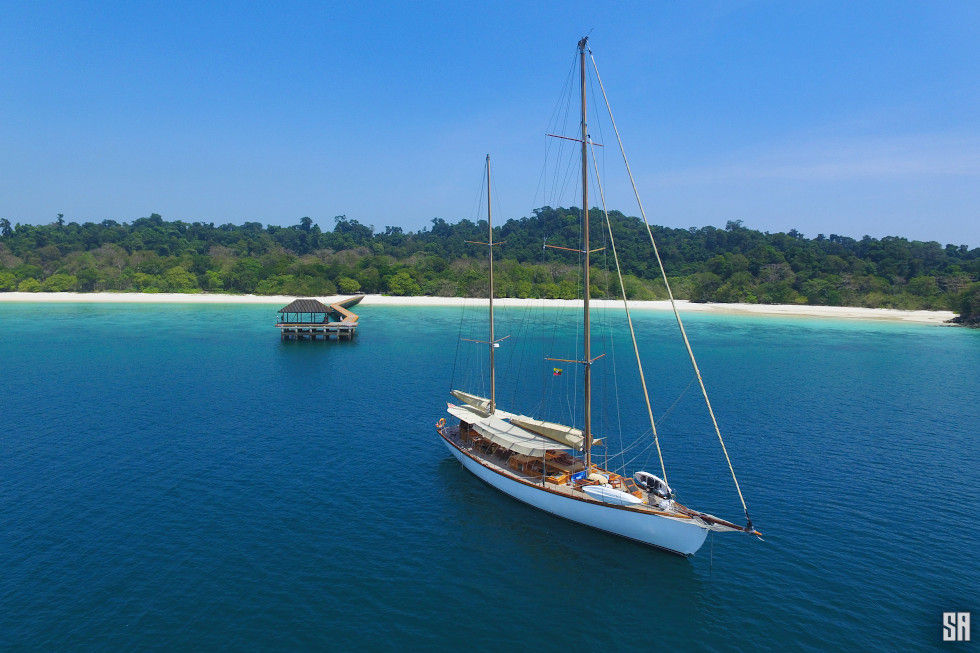
In 2016, I had the opportunity to explore the archipelago on a five-day cruise aboard Aventure, a 29-metre wooden ketch commanded by Michel Desmers, who has sadly since passed away. I boarded in Ranong, and we crossed the river to Kawthaung. Customs and port authorities kept us waiting for a while, but we eventually set sail towards our first stop, a quiet bay south of Zadetkyi Island, where we spent our first night.


Lampi Island
After stopping in a magnificent bay south of Buda Island, where I had the opportunity to test my drone, we continued towards Lampi Island. We spent the night in a large bay sheltering two small islets on the northern side of the island. The following day, we explored the beach and followed the river that flows into the bay.
Lampi Island is one of the most remarkable islands in the Mergui Archipelago and forms part of the Lampi Marine National Park, Myanmar's first marine national park. Much of the island is covered by dense tropical rainforest, while its coastline is a succession of sandy beaches, rocky shores, mangroves, tidal creeks, and sheltered bays.
The island's largely untouched character makes it an excellent place to experience the wild side of the Mergui Archipelago. There are no major resorts or developed tourist facilities here, and the landscape remains dominated by forest and water. Exploring the coastline by boat reveals secluded beaches that can remain completely deserted, while inland waterways lead into mangrove forests and dense vegetation.

Lampi is also important for its wildlife. The surrounding waters and coastal ecosystems support numerous species of fish and other marine life, while the forests provide habitats for birds, reptiles, and mammals. The island is particularly representative of the type of pristine environment that has made the Mergui Archipelago so attractive to adventurous travellers and nature lovers.
Walking along the beach and exploring the river gave me a first-hand impression of just how remote this part of Myanmar is. After several days of sailing between largely uninhabited islands, it was easy to understand why the Mergui Archipelago has long been considered one of Southeast Asia's last great wilderness areas.

Ma Kyone Galet and Bo Cho Island
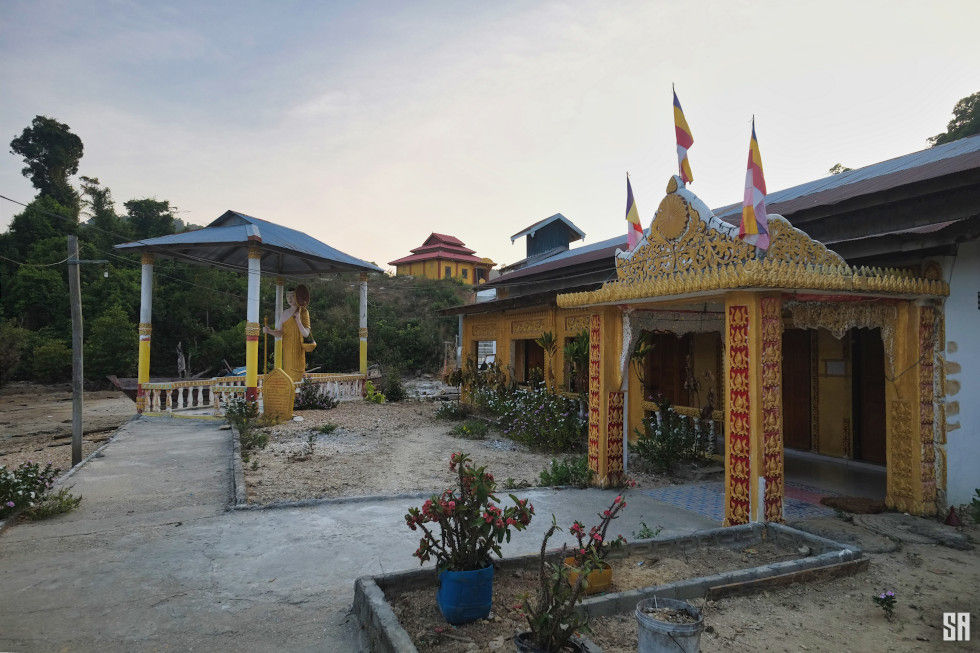
We then anchored in the channel separating Lampi Island from Bo Cho Island, where the Moken village of Ma Kyone Galet is located. The Moken are traditionally known as the "sea gypsies" of the Andaman Sea, having historically lived a largely nomadic life travelling between the islands and coastal waters of Myanmar and Thailand.
Ma Kyone Galet is one of the places where visitors can encounter this fascinating community. The village stretches along the shoreline, with simple wooden houses facing the sea and a Buddhist temple forming one of its most recognisable landmarks. The village gives a very different impression from the developed tourist destinations found elsewhere in the region.

During our visit, we saw everyday scenes that offered a glimpse into village life, including the training of fighting cocks. The houses and facilities were basic, and there was certainly no sign of opulence, but the people we encountered appeared to be living relatively comfortably within a distinctly rustic environment.
The Moken's traditional way of life has been closely connected to the sea for generations. Their knowledge of the waters, islands, tides, and marine environment has allowed them to survive in one of Southeast Asia's most remote regions. However, their traditional lifestyle has faced increasing pressure from modern borders, settlement policies, environmental changes, and restrictions on access to traditional fishing grounds.
Visiting Ma Kyone Galet therefore provides more than an opportunity to see a remote village. It offers a glimpse into a culture that has developed in close relationship with the sea and the extraordinary environment of the Mergui Archipelago.

Lord Loughborough Island and Kawthaung
Our final anchorage was in a charming little lagoon on Lord Loughborough Island. As we sailed through the archipelago, Michel told us stories about the region, including the numerous military posts scattered throughout these remote waters. It was certainly not advisable to fly my drone anywhere near them.
He also told us about the valuable swiftlet nests found on some of the islands. These nests are used to produce bird's nest soup and can be extremely valuable, which explains why some nesting sites are fiercely guarded by armed men. Not everything in the Mergui Archipelago is idyllic. Illegal and aggressive fishing practices have also posed serious threats to the region's marine environment and local communities.
We made our final stop in Kawthaung, the Myanmar border town, where I had the opportunity to take photographs in the port, the covered market, and the surrounding streets. A real hive of activity, Kawthaung nevertheless had a rather run-down and impoverished side that reminded me in some ways of what we had seen in Ma Kyone Galet.
We then sailed back towards Thailand, stopping at Koh Phayam before officially completing our entry into the country at the Immigration Police office at Chalong Pier, on the southeastern coast of Phuket.
The journey had given me a rare glimpse of a part of Southeast Asia that still felt genuinely remote. Sailing through the Mergui Archipelago, between uninhabited islands, dense forests, deserted beaches, and traditional coastal communities, was an experience very different from the more developed destinations of the Andaman Sea.
Last visit & photos: Mergui Archipelago — 25 March 2016

Mergui Archipelago & Kawthaung Photos




Passionate about photography since the mid-2000s, I’ve spent years capturing the beauty of Phuket and southern Thailand — from beaches and islands to festivals and daily life. My work reflects a lasting love for the region and its ever-changing light.


