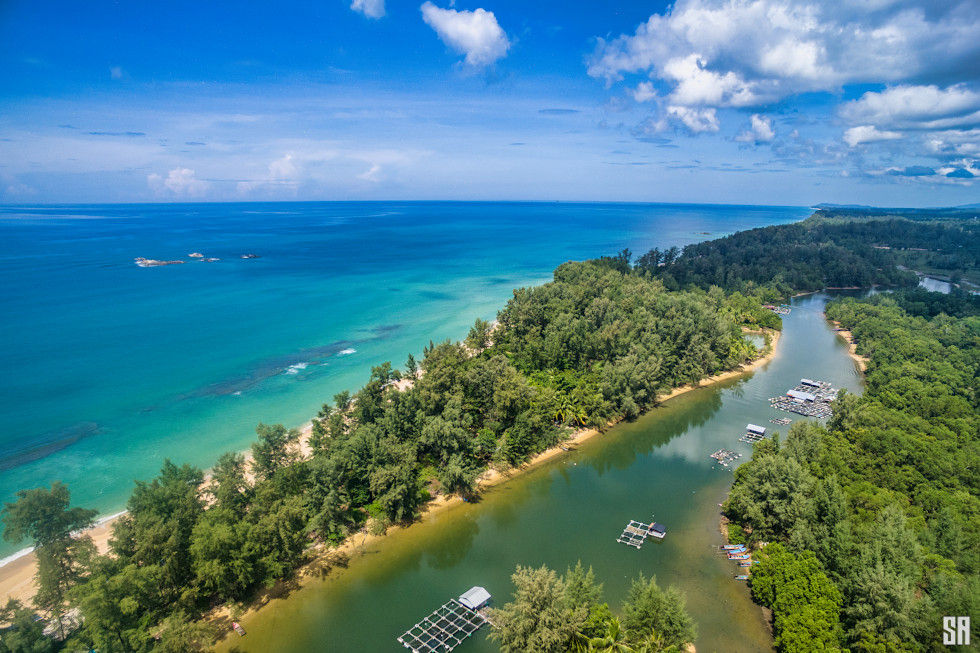
Bang Pae and Tonsai Waterfalls in Phuket
Hiking in Khao Phra Thaeo National Park

Bang Pae and Tonsai are two of the three most famous waterfalls in Phuket. Both are located within Khao Phra Thaeo National Park, which covers a mountainous area of about 20 square kilometers in the northeast of Phuket Island. Tonsai Waterfall lies on the western side of the park, while Bang Pae Waterfall is located on its eastern side.
The two waterfalls are about 3.5 kilometers apart as the crow flies, and for many years one of my small dreams was to connect them on foot: a hike through primary rainforest, following the stream upstream from Tonsai and then descending along the watercourse toward Bang Pae.
So my friend Jean and I decided to attempt this roughly 6-kilometer trek through the forest trails, exploring the park on our own.
Unfortunately, an unpleasant surprise awaited us at Bang Pae. When we arrived, the park rangers informed us that this hike is not allowed without a guide. To make matters worse, they did not allow us to walk back toward Tonsai to retrieve our car, so we had to take a taxi to return to the starting point.
In conclusion: it is possible to hike between the two waterfalls in Khao Phra Thaeo National Park, but only with a guide (park ranger) hired through the national park authorities.

Tonsai Waterfall
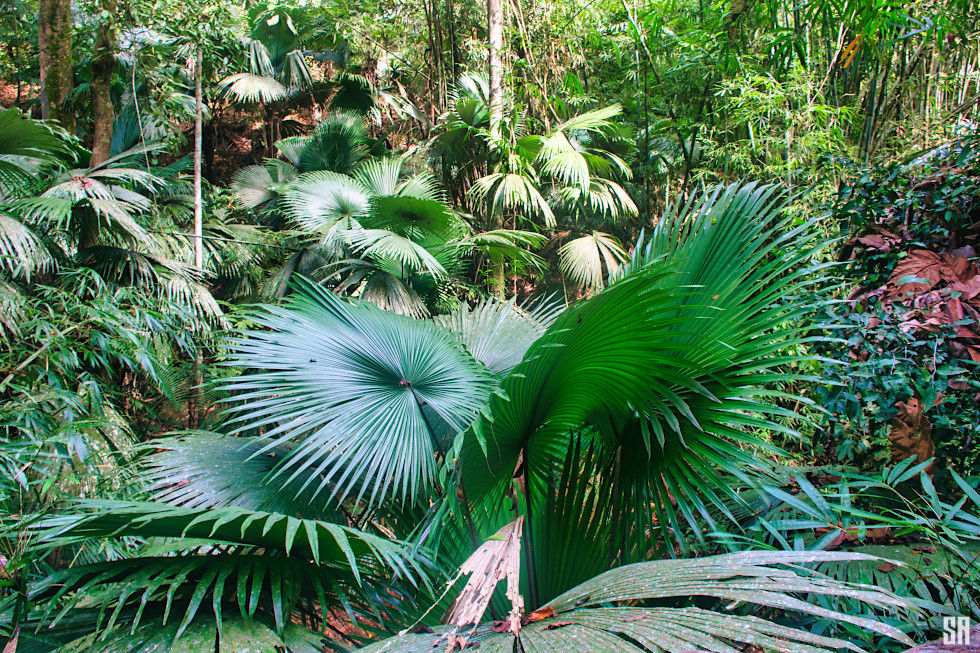
Hidden in the western part of Khao Phra Thaeo National Park, Tonsai Waterfall is one of Phuket’s most peaceful natural spots. Surrounded by dense tropical forest, it offers visitors a chance to experience the island’s last remaining primary rainforest. The atmosphere here is quiet and relaxing, making it a great destination for nature lovers, birdwatchers, and hikers who want to escape Phuket’s busy beaches.
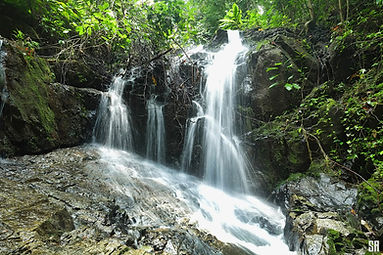
Unlike some waterfalls that are impressive only after heavy rains, Tonsai is especially appreciated for its natural setting. The waterfall itself flows down a rocky slope into small pools surrounded by jungle vegetation. During the rainy season, the water volume increases and the cascade becomes much more impressive, while in the dry season the area remains a pleasant place for a short forest walk.
Several nature trailsstart near the waterfall entrance and lead into the heart of the forest. These trails pass through thick vegetation filled with tall trees, vines, and the sounds of tropical wildlife. Keep an eye out for birds, butterflies, and occasionally monkeys moving through the canopy.

How to get there
Tonsai Waterfall is located in Thalang District, about 25 kilometers north of Phuket Town and a short drive from Phuket International Airport. The road leading to the park entrance passes through rubber plantations and small local villages. Parking is available near the entrance, followed by a short walk to the waterfall.
Entrance fee
As Tonsai lies inside Khao Phra Thaeo National Park, visitors must pay the national park entrance fee:
· 400 THB for adults (foreign visitors)
· 200 THB for children
Thai nationals pay a reduced fee.

Bang Pae Waterfall
Located on the eastern side of Khao Phra Thaeo National Park, Bang Pae Waterfallis often considered the most popular waterfall on the island. Larger and more accessible than Tonsai, it attracts both visitors and locals looking for a refreshing break in nature.
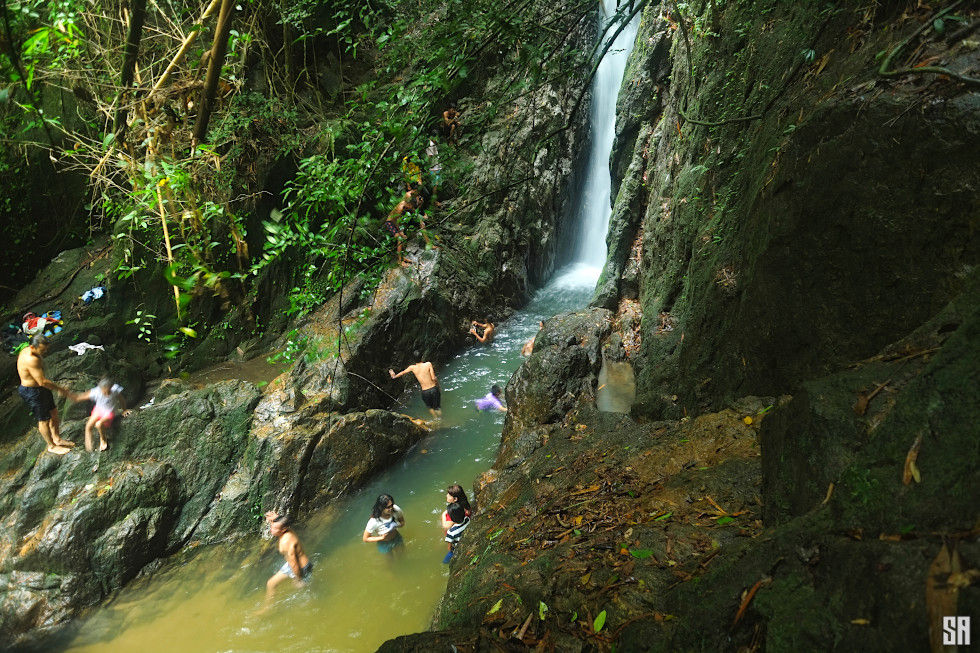
A short forest path leads from the park entrance to the waterfall, which flows over a rocky cliff into a natural pool surrounded by jungle. During the rainy season, the cascade becomes quite powerful and creates a lively tropical atmosphere. Even in drier months, the area remains shaded and cool thanks to the dense rainforest canopy.
Bang Pae is also known for hosting the Gibbon Rehabilitation Project, a conservation center dedicated to rescuing and reintroducing gibbons into the wild. Visitors can learn about the project and sometimes observe these fascinating primates from a distance while walking near the entrance area.
The surrounding forest is one of the last significant patches of primary rainforest in Phuket, making the site an important natural sanctuary for many species of birds, reptiles, and insects.

How to get there
Bang Pae Waterfall is located about 20 kilometers northeast of Phuket Town and can easily be reached by car or motorbike. The entrance road runs through rural countryside and small plantations before reaching the national park entrance, where parking is available.
Entrance fee
As with Tonsai Waterfall, visitors must pay the Khao Phra Thaeo National Park entrance fee:
· 400 THB for adults (foreign visitors)
· 200 THB for children
What to expect
Bang Pae is generally more visited than Tonsai, especially on weekends and during the rainy season when the waterfall is at its most impressive. Arriving early in the morning or later in the afternoon is the best way to enjoy the peaceful jungle atmosphere before the crowds arrive.


Highlights
One of the last remaining primary rainforests in Phuket, rich in wildlife and tropical vegetation.
Home to two of the island’s most famous waterfalls, Bang Pae and Tonsai.
Short jungle trailsideal for nature walks and light hiking.
Opportunity to visit the Gibbon Rehabilitation Project near Bang Pae Waterfall.
A refreshing escape from Phuket’s beaches, with shaded forest paths and natural pools.
Heads Up
The best water flow is during the rainy season (roughly August–December).
Entrance fee required for the national park (higher for foreign visitors).
Trails and stairs can be slippery after rain, so proper footwear is recommended.
Mosquito repellent is useful, especially in the humid forest areas.
Hiking between Bang Pae and Tonsai requires a guide (park ranger).
Best Time to Visit Khao Phra Thaeo National Park
The best time to visit Phuket’s waterfalls is during the rainy season, when the island’s tropical climate brings regular showers that feed the streams and rivers flowing through the jungle. From August to December, waterfalls such as Bang Pae Waterfall, Tonsai Waterfall, and Kathu Waterfall usually carry the most water, making them far more impressive and enjoyable to visit.
During the dry season (roughly December to April), some waterfalls may slow to a gentle trickle, especially after long periods without rain. However, they can still be pleasant places for a short jungle walk and a break from the heat, as the surrounding forest remains cool and shaded.

For the best experience, try to visit early in the morning, when the air is cooler and the forest is filled with the sounds of birds and wildlife. After heavy rainfall, the waterfalls can become particularly powerful, but paths may also be slippery, so good footwear is recommended.
Whether visited during the lush monsoon months or on a quiet dry-season walk, Phuket’s waterfalls offer a refreshing glimpse of the island’s tropical rainforest and a welcome escape from its busy beaches.
Bang Pae & Tonsai Waterfalls Photos



Khao Phra Thaeo National Park Location Map

Passionate about photography since the mid-2000s, I’ve spent years capturing the beauty of Phuket and southern Thailand — from beaches and islands to festivals and daily life. My work reflects a lasting love for the region and its ever-changing light.
Last visit & photos: Tonsai & Bang Pae Waterfalls — 23 February 2025